NeuroVizsgApp
LIVE beta Try it
Topics


Topics
Slide animation
AI revision

My MS
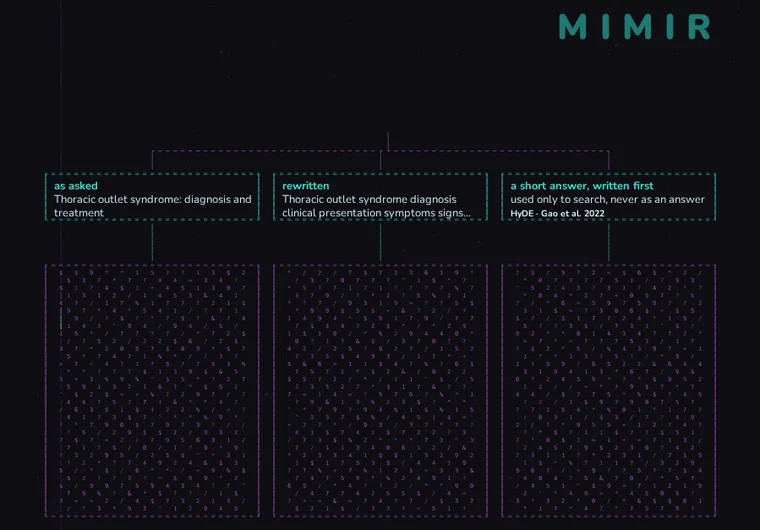
How Mimir finds and checks its sources, with one recorded example answer. RAG: it looks up the sources first, then answers from them.


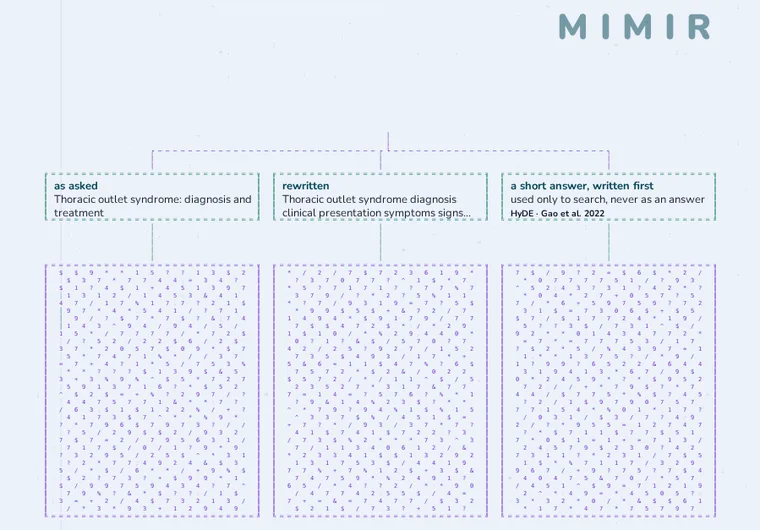
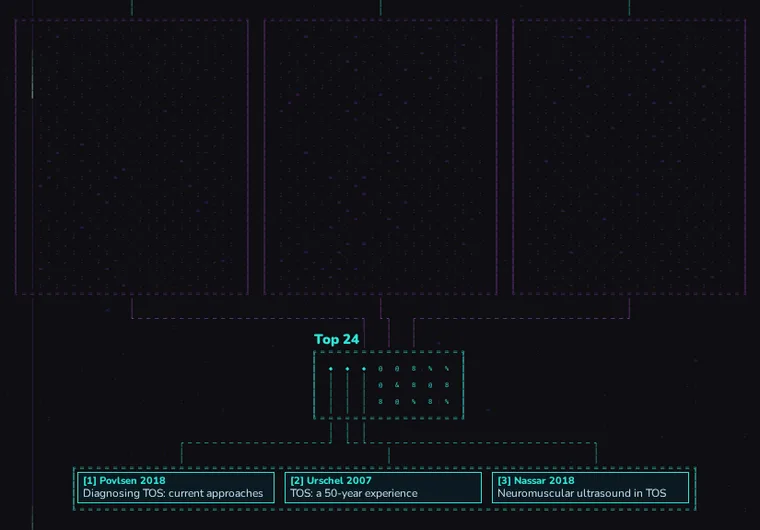
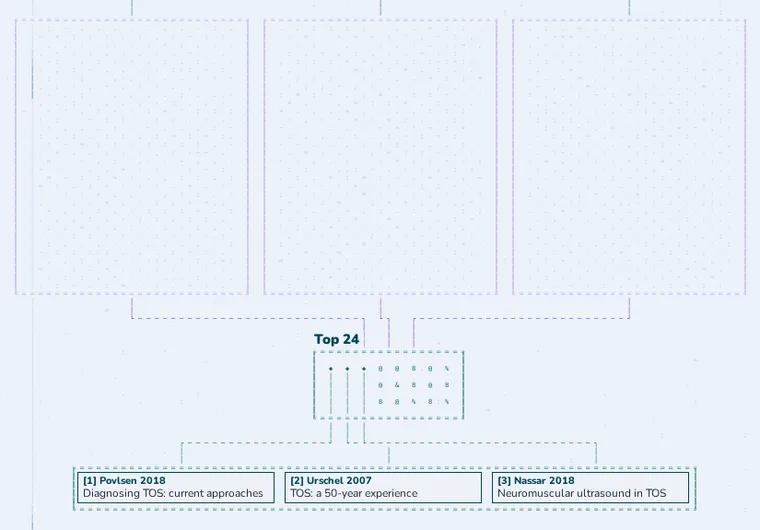
Anchored in research
Where the ideas come from; the verdicts shown come from the recorded answer’s own check.
Thoracic outlet syndrome: diagnosis and treatment
Point at a source or a claim: its passage shows here.
AI-written answer recorded 17 July 2026 by an earlier version; rewritten excerpts. Not a medical device; not for clinical decision-making.
Example question Thoracic outlet syndrome: diagnosis and treatment
Research system under evaluation. Not clinical advice. Not a medical device; not for clinical decision-making. Retrieval: a live run of a candidate retrieval configuration, 27 September 2026. Answer: an AI-written answer (language model) recorded on 17 July 2026 by an earlier version, shown as 5 rewritten, shortened excerpts of its 10 checked claims with their original checks. Two of the papers it cites are also near the top of this run.
Since its inception in 1956 by Peet et al., thoracic outlet syndrome (TOS) has been used to refer to a constellation of symptoms resulting from neurovascular compression at the thoracic outlet, usually resulting in some combination of pain in the neck and upper extremity, weakness, sensory loss, paraesthesias, swelling, and discoloration. The exact constellation of signs and symptoms depends on the exact structures being compressed, but the common symptoms of pain can result from either damage to the subclavian vein, subclavian artery, or different parts of the brachial plexus. …The most remarkable change over the past 50 years is the use of nerve conduction velocity to diagnose and monitor patients with nerve compression. … Complete first rib extirpation at the initial procedure markedly reduces the incidence of recurrent neurologic symptoms or the need for a second procedure.Thoracic outlet syndrome (TOS) was described in 1956 by Peet et al. and refers to a group of disorders affecting the brachial plexus, the subclavian vessels, or both, at any point between the base of the neck and the axilla, with several anatomical sites for compression including the interscalene triangle, costoclavicular space, and coracopectoral tunnel. For the diagnosis of TOS, a number of clinical, radiographic, and electrodiagnostic tests have been described. However, many tests are considered unreliable and there is not a single test that is regarded as the 'gold standard' diagnostic test. …Research prototypes, not medical devices.